The Kitchen as a Workshop
Of all the rooms in a home, the kitchen is the most purely functional. It is a workshop for processing raw materials into meals. Treating it as a display area for decorative items or single-use gadgets fundamentally degrades its utility. A minimalist kitchen prioritizes clear surfaces, sharp tools, and logical flow over aesthetic clutter.
Eliminating Duplicates and Unitaskers
The culinary industry excels at marketing highly specific tools for simple tasks. Avocado slicers, strawberry hullers, and garlic presses occupy valuable drawer real estate while performing jobs easily handled by a standard chef's knife. If an item performs only one highly specific task, it must be evaluated rigorously. Unless you bake daily, you likely do not need three different sizes of whisks.
Begin by removing duplicates. You only need one set of measuring cups, one sturdy spatula, and one reliable pair of tongs. The fewer items you have, the easier they are to locate, clean, and store.
Zoning the Workspace
Efficiency in a kitchen is dictated by the concept of "point of use." Items should be stored exactly where they are first needed.
- Prep Zone: Knives, cutting boards, mixing bowls, and prep tools should live between the sink and the primary counter space.
- Cooking Zone: Pots, pans, wooden spoons, cooking oils, and frequently used spices belong immediately adjacent to the stove.
- Storage Zone: Tupperware, foil, and wrap should be grouped together near the refrigerator or wherever you package leftovers.
- Cleaning Zone: Dish soap, sponges, and trash bags stay beneath the sink.
The Decanting Debate: Pros and Cons
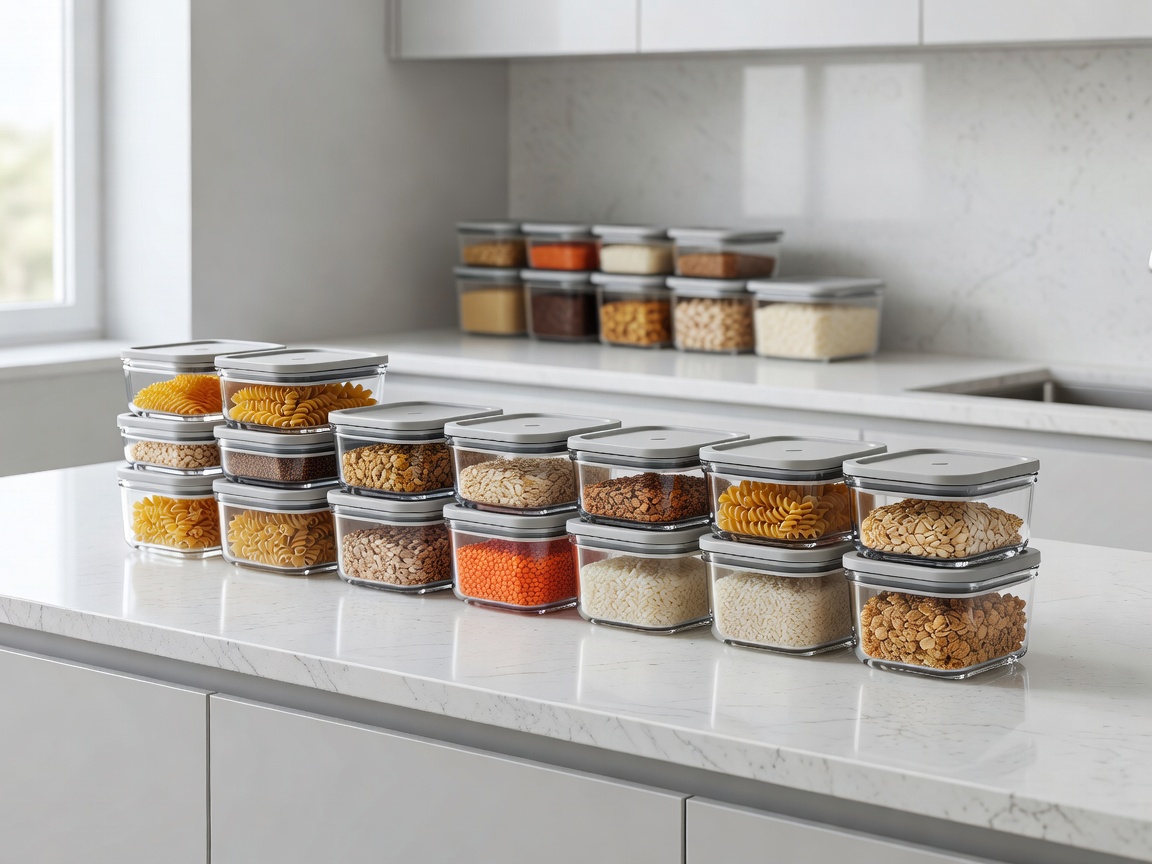
Transferring pantry staples from their original packaging into clear, uniform containers (decanting) is a popular visual organization trend. However, it requires maintenance.
| Advantages of Decanting | Disadvantages of Decanting |
|---|---|
| Immediate visual inventory (you know exactly how much rice is left). | Requires time to transfer items after grocery shopping. |
| Square/rectangular containers maximize shelf space better than odd-shaped bags. | Upfront cost of purchasing high-quality, airtight containers. |
| Reduces visual noise (no bright logos shouting from the pantry). | Requires tracking expiration dates and cooking instructions manually. |
Clear Surfaces
The ultimate metric of a well-organized kitchen is the percentage of clear countertop space. Appliances that are used less than three times a week (blenders, stand mixers, slow cookers) belong in cabinets, not on the counter. The toaster and coffee maker may remain if used daily, but everything else should be stowed. A clear counter is easier to wipe down, vastly reducing the friction required to begin cooking a meal.